
Curated by Blair Fornwald
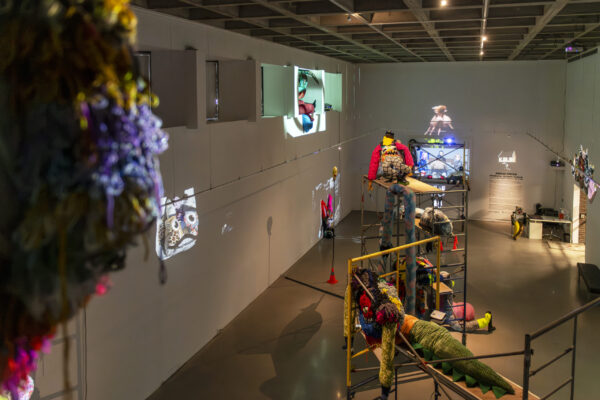
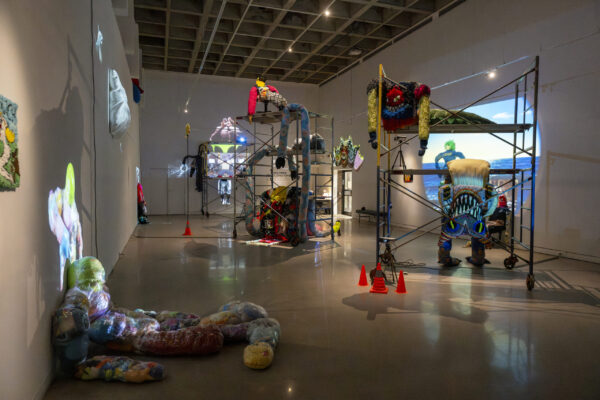
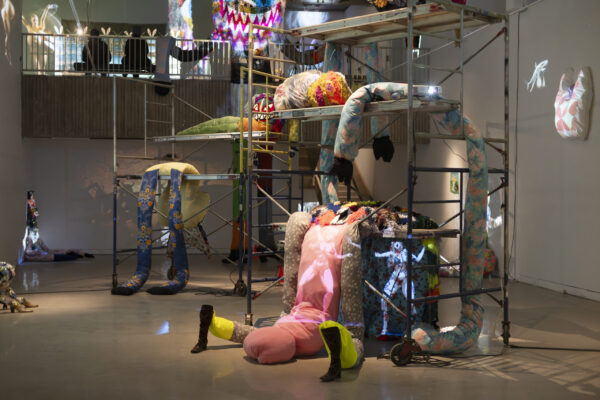
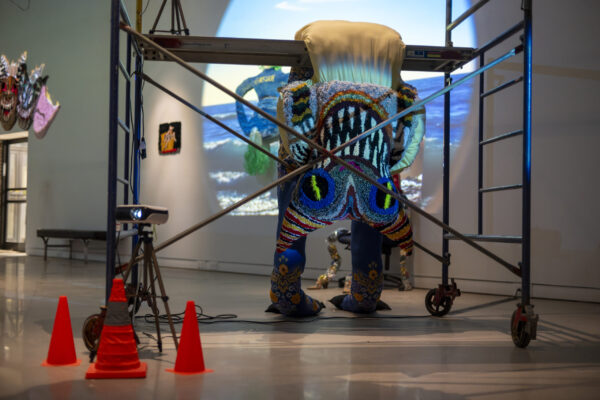
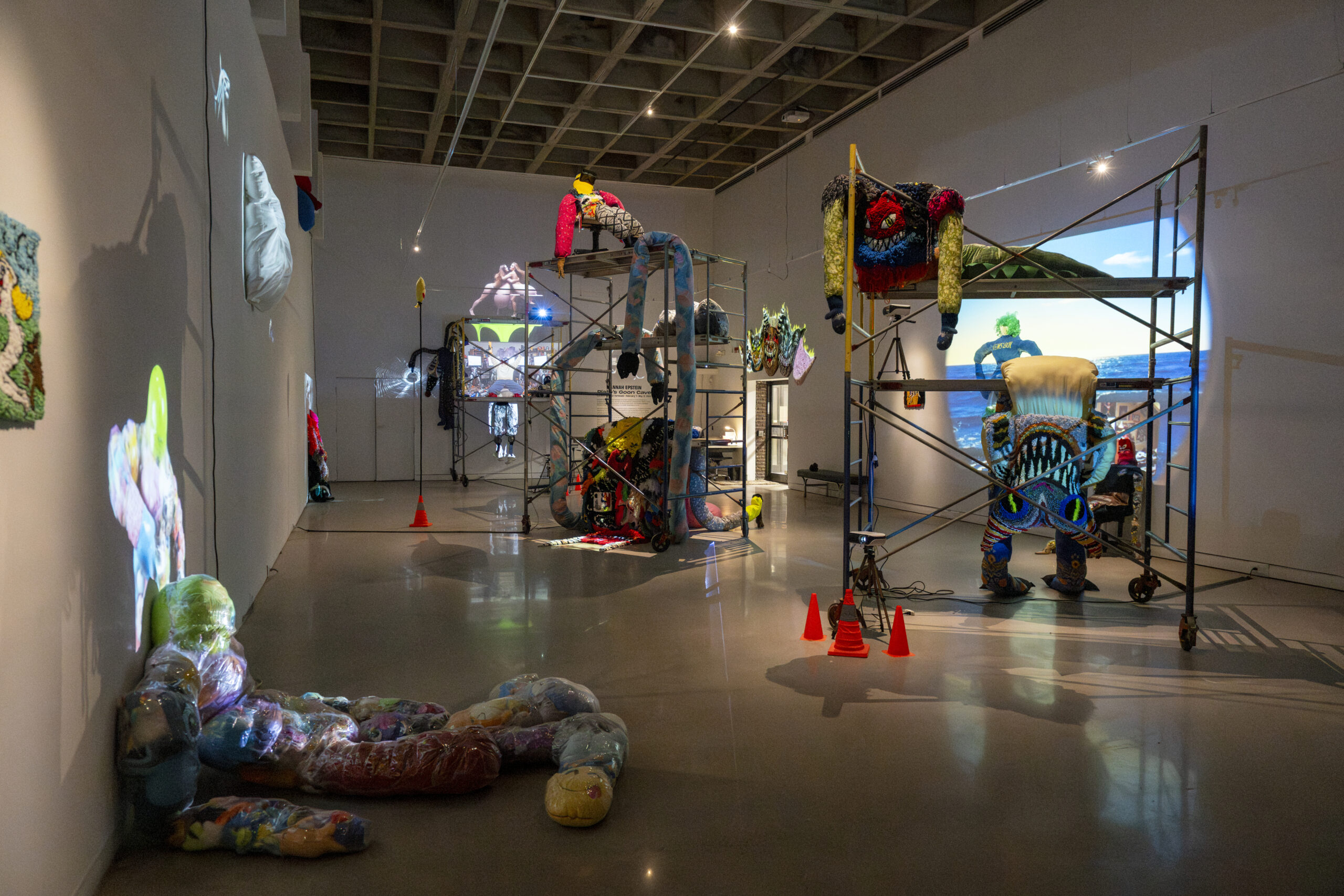
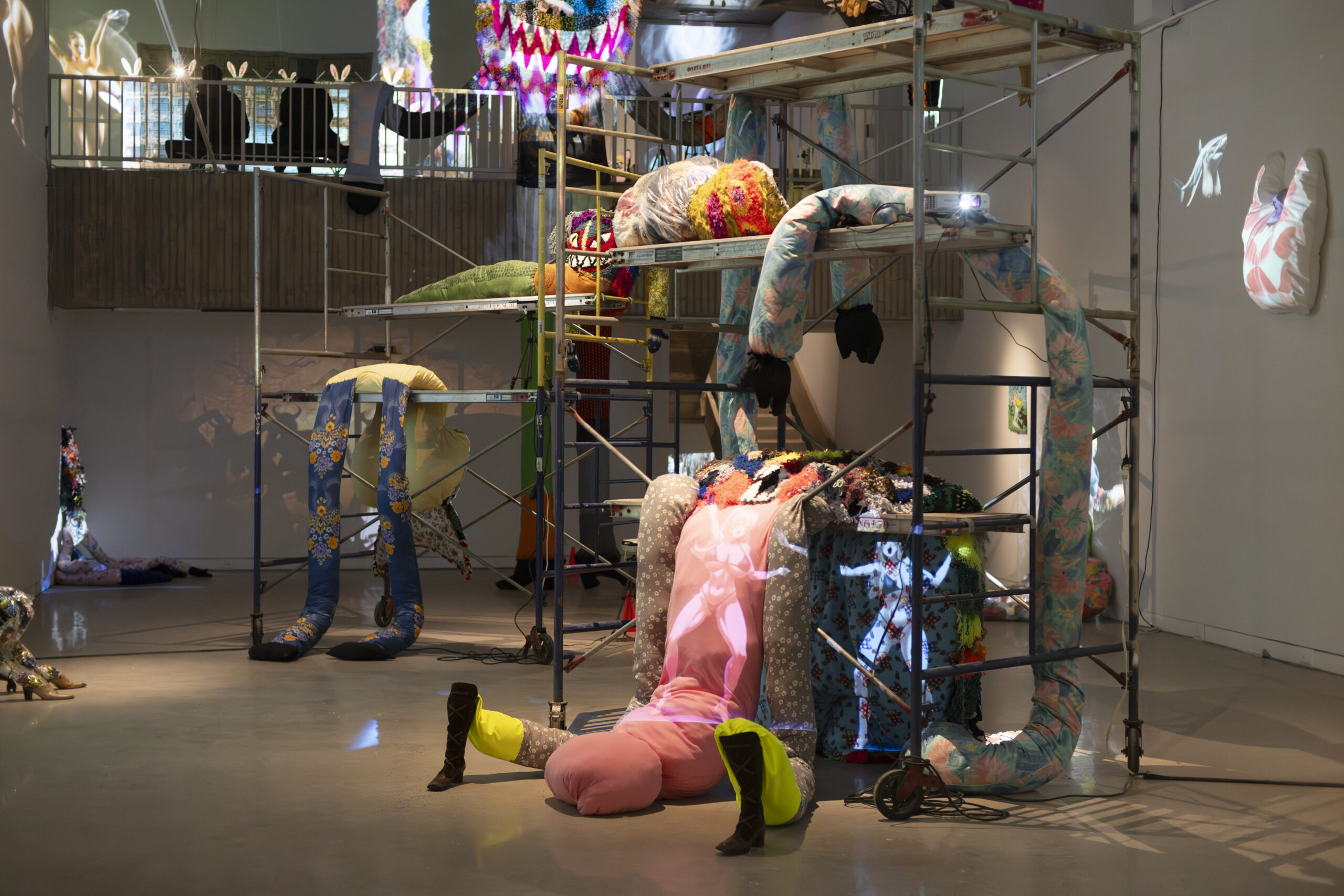
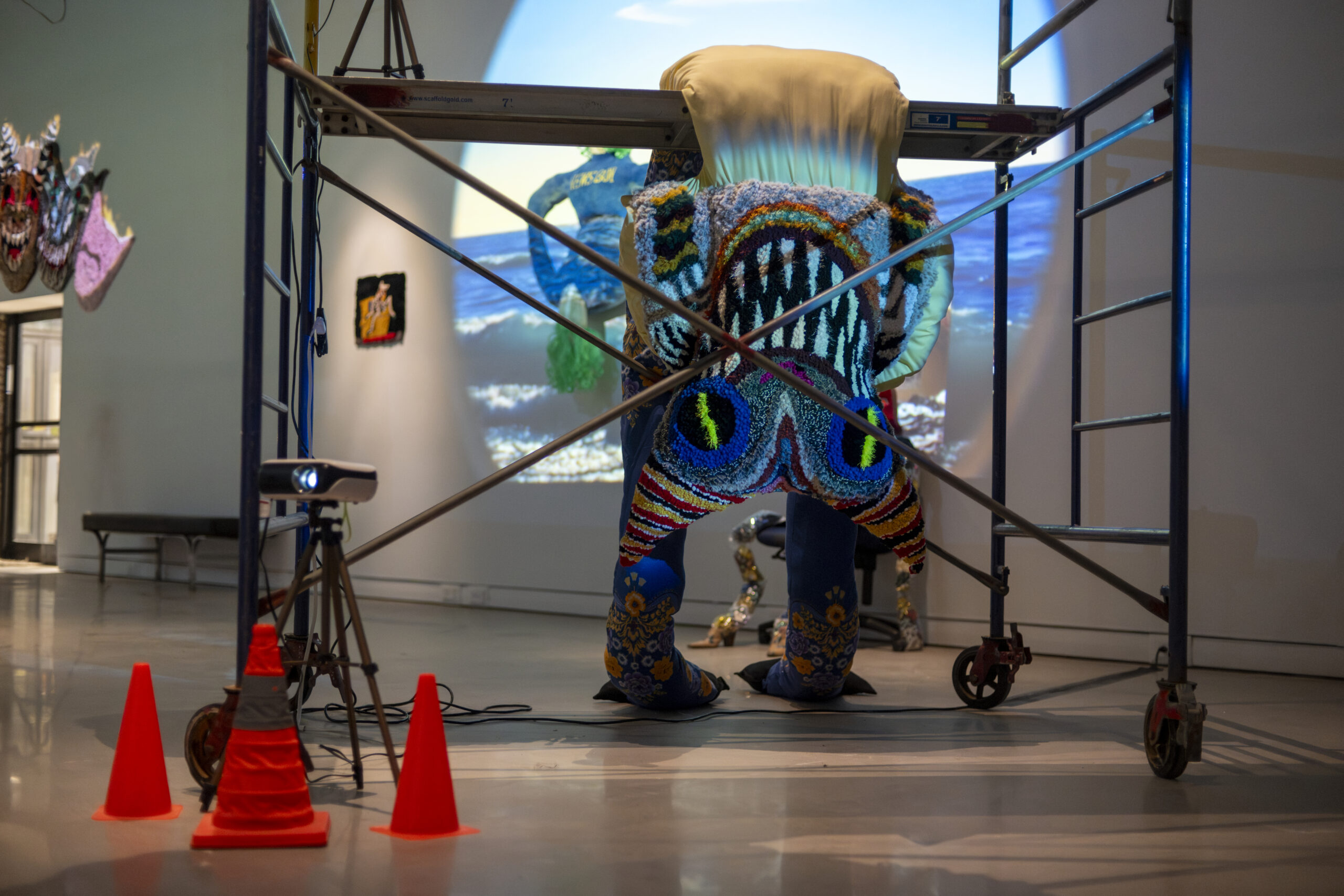
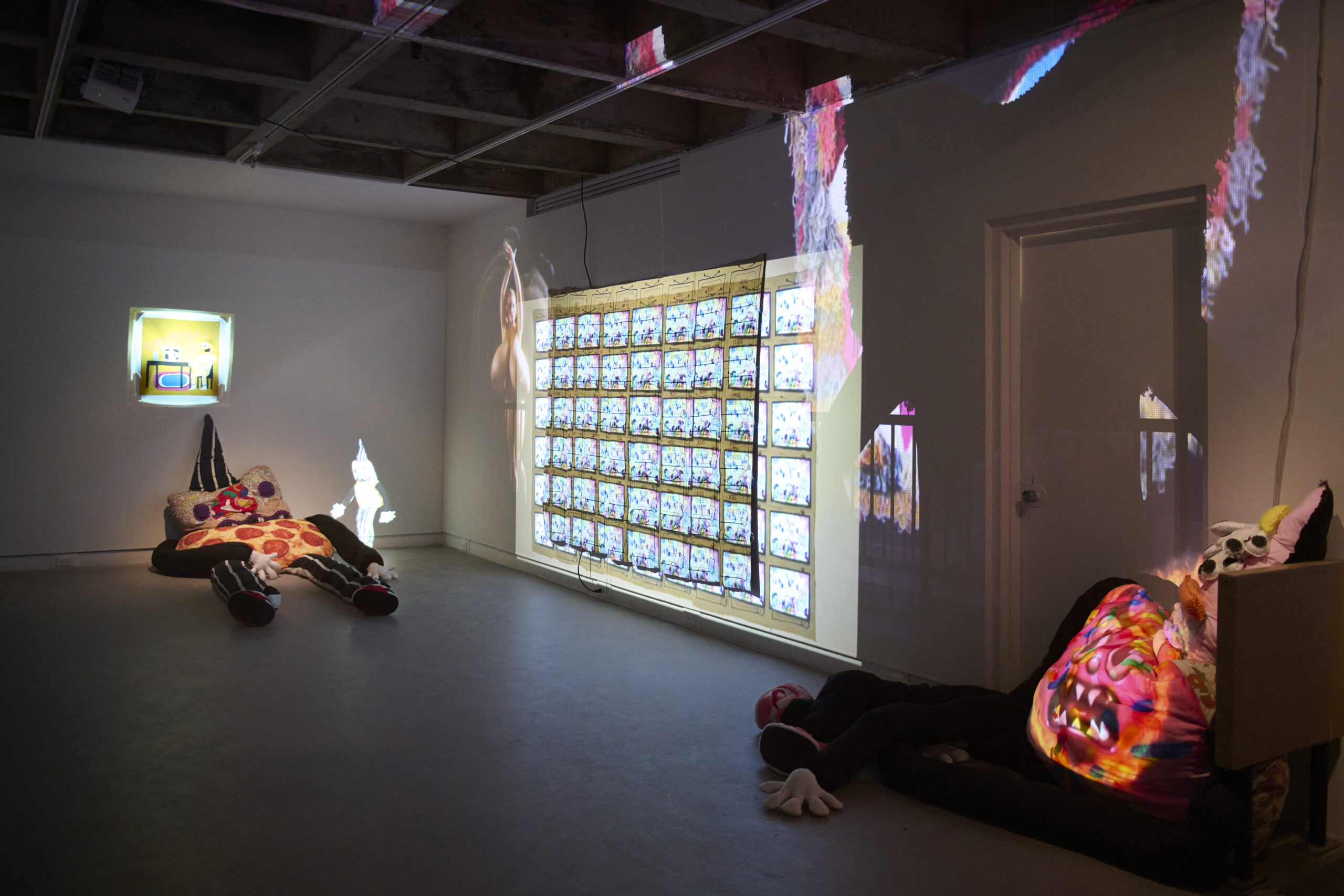
Hannah Epstein combines textiles and digital media to create characters, immersive environments, and stories that explore contemporary desires and anxieties through a folkloric lens. In Plato’s Goon Cave, she stages a slippery allegory of epistemic uncertainty in a media-saturated present.
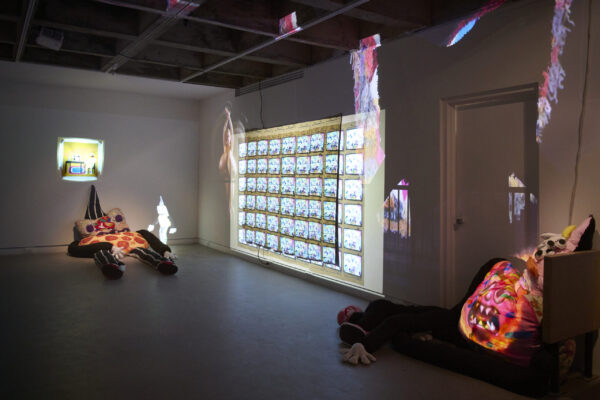
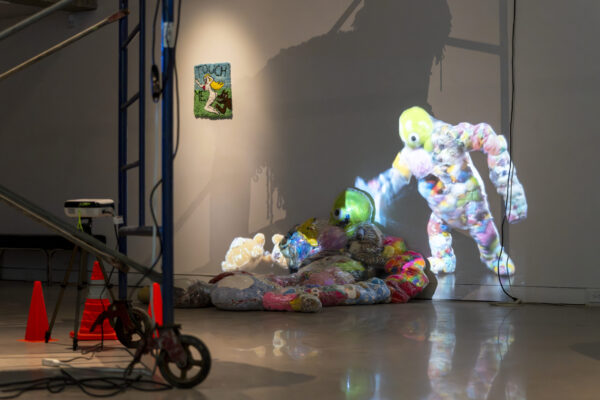
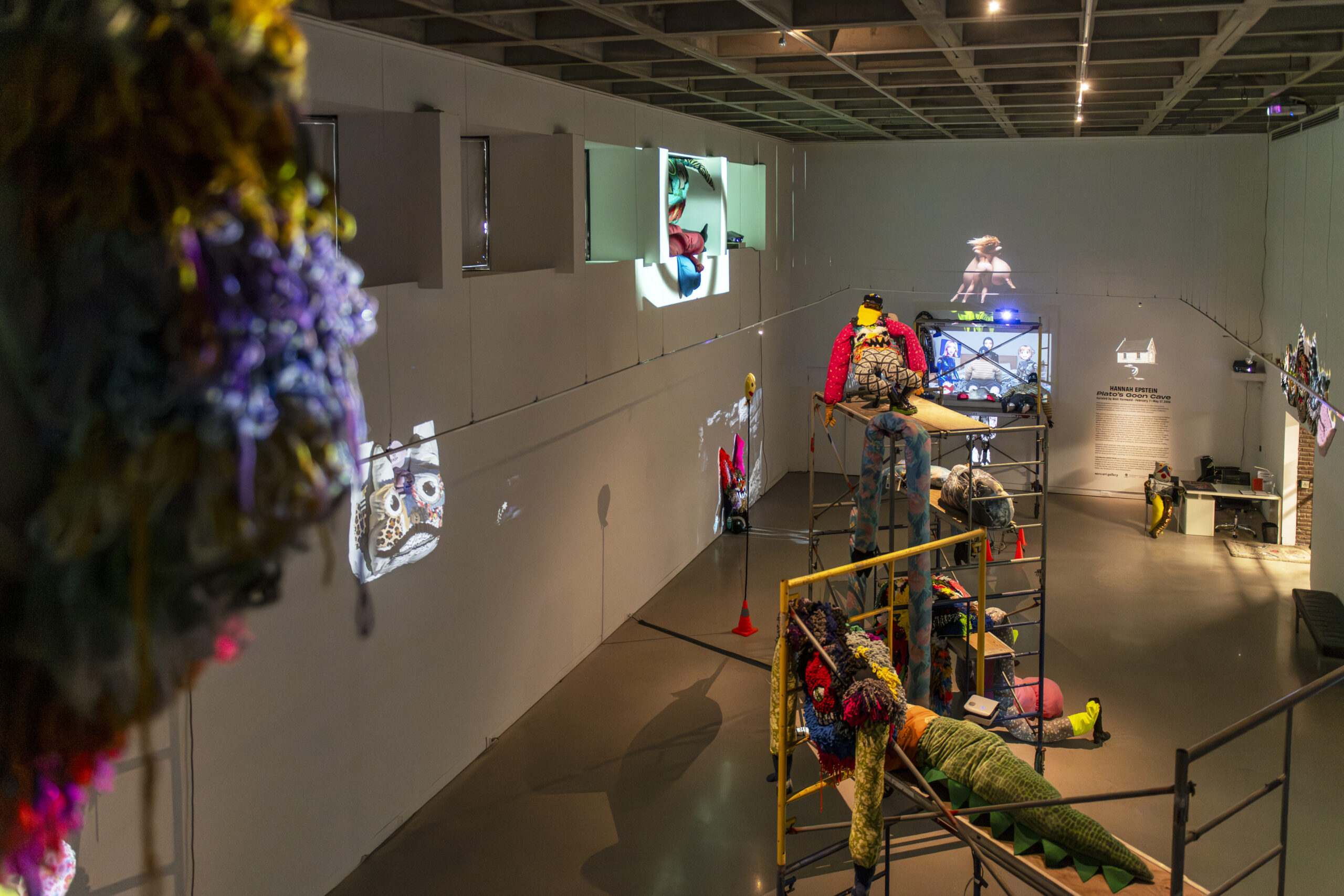
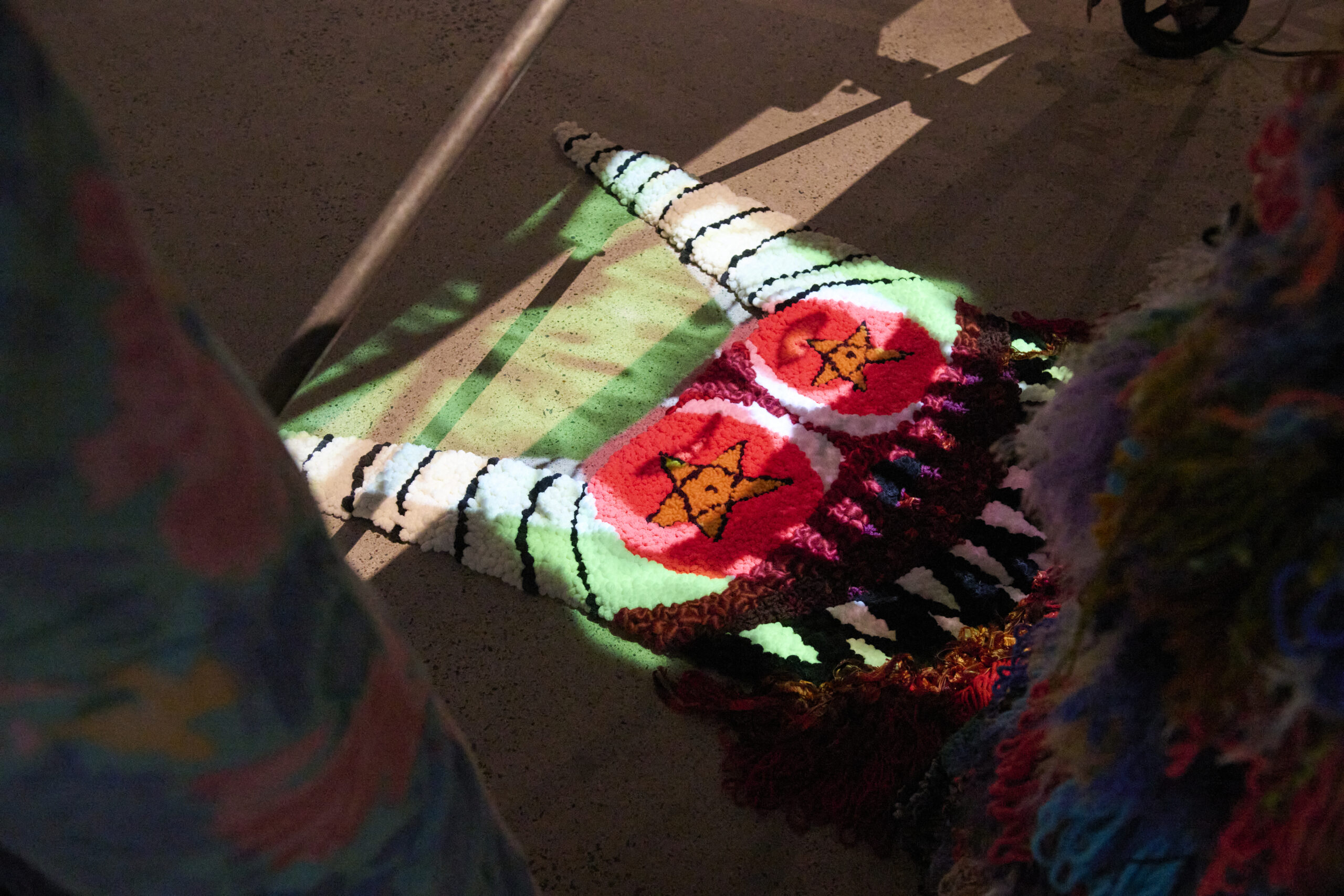
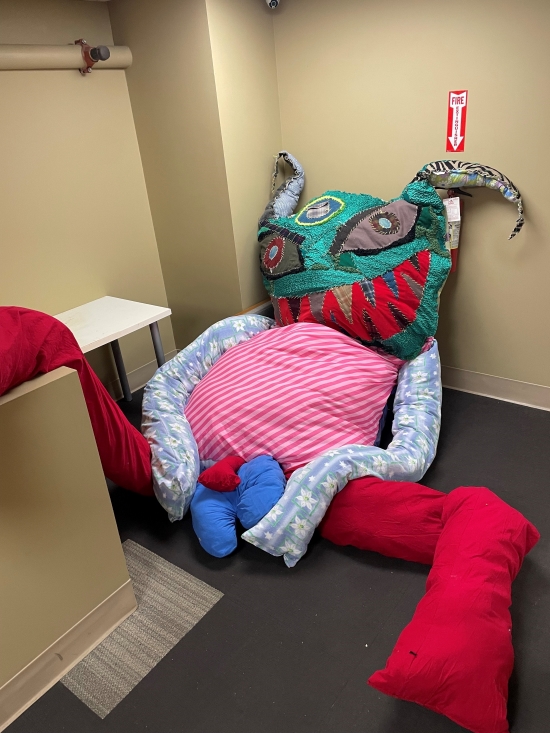
The work is a funhouse-mirror inversion and a contemporary revisioning of Plato’s Allegory of the Cave. Illustrating the cognitive trap of ignorance, Plato imagines a group of people chained inside a dark cave, who are subjected to endless shadow-puppet play, which they mistake for reality. A freed prisoner, he reasons, would be so overstimulated by the world outside, that they would return to the cave, preferring the simplicity of the simulated world. Epstein, conversely, imagines a cave where the simulations have become chaotic, fascinating and deeply stimulating. The hulking goons that populate her installation—collectively named after the practice of sustaining a euphoric, trance-like state through prolonged masturbation or other self-soothing, repetitive behaviors—are unchained. They seem complacent and oddly self-sufficient, goggle-eyed and grinning in their cave, which is awash with AI-generated video projections animating them with narrative complexity, ontological ambiguity, and something approaching vitality.
Epstein’s work address ways that technology troubles and transcends logic: What happens when simulations of reality are no longer affixed to real-world referents? When they are generative and deeply synchronous, attuned to our subconscious desires and anxieties? At what point do they become something else entirely? And at what point might gooning out to this slop become strangely productive?
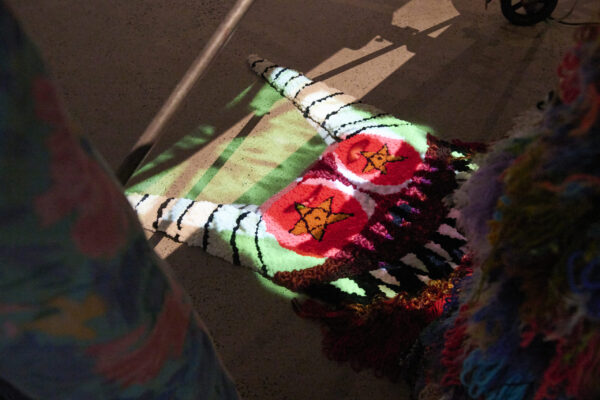
image: Hannah Epstein, Plato’s Goon Cave, 2025-2026, work in progress. Image courtesy of the artist.